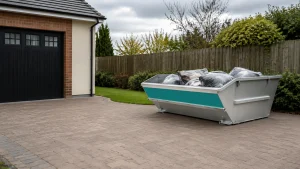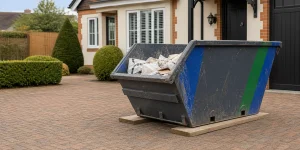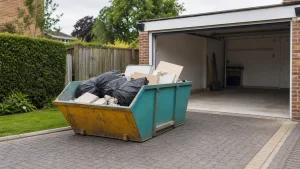
Loose packaging, dry leaves and small renovation offcuts can escape a skip long before collection day. A breeze can lift lightweight material, while torn bags and careless tipping can leave fragments around the loading area.
Keeping waste contained starts before it reaches the skip. With suitable bags, careful handling and a secure cover where appropriate, you can keep your driveway or work area tidy without making clearance complicated. Here is how to manage the materials most likely to scatter.
Identify loose materials before you start
Separate waste that can blow away from material that can spill or release dust. Each needs slightly different handling, so one large pile is rarely the easiest starting point.
- Lightweight waste: plastic wrapping, insulation offcuts, loose paper and packaging can lift in a breeze.
- Small fragments: broken tiles, wood chips and bits of rubble can escape through damaged bags.
- Fine material: sanding dust, powdered debris and dry soil need particular care to avoid airborne dust.
Check which materials your skip provider accepts before bagging them. Insulation, plasterboard and other renovation materials may need separate arrangements. Putting something in a bag does not make it suitable for a mixed waste skip.
If you uncover suspect asbestos or an unidentified powder, stop handling it and seek specialist advice. Do not sweep it up or tip it into the skip. Keep accepted materials separate from anything awaiting advice so nobody adds the wrong waste by mistake.
Bag small waste where it is produced
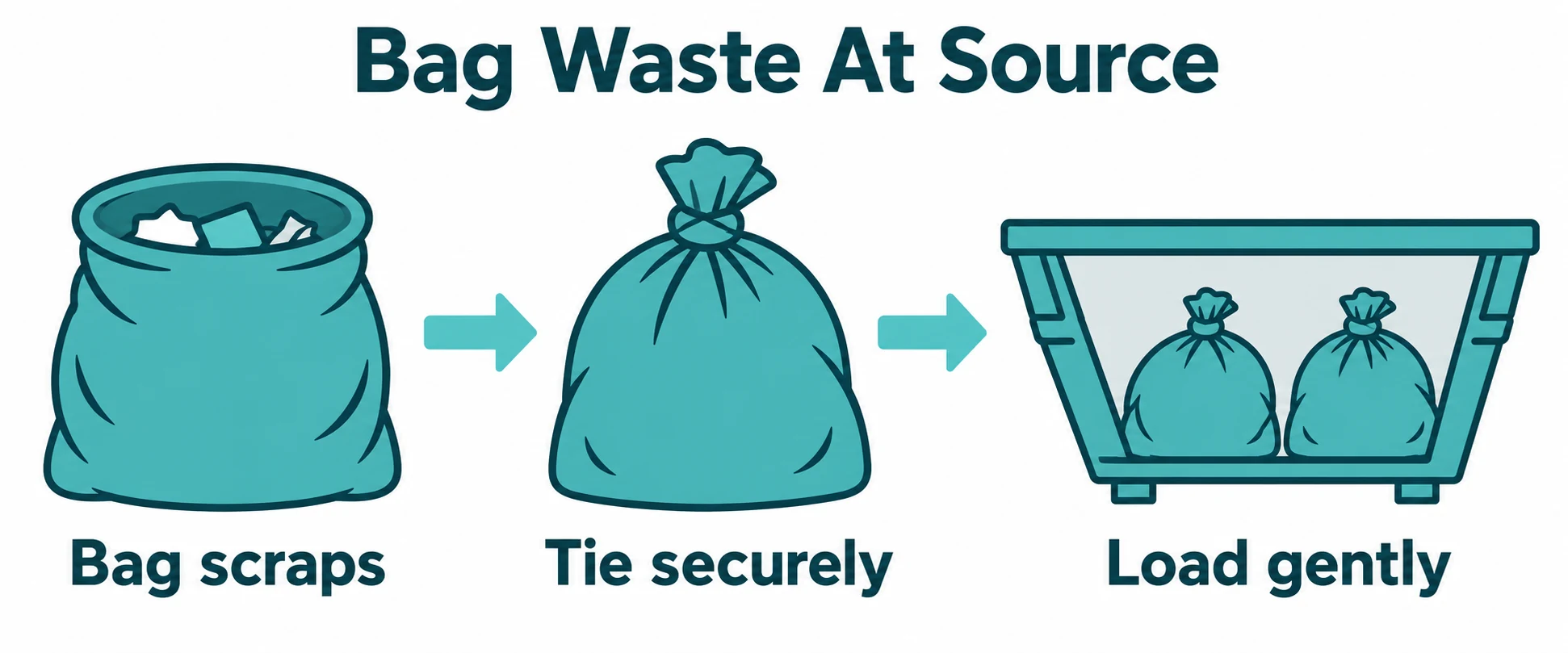
Keep suitable waste sacks close to the work rather than carrying loose handfuls across the driveway. Bagging at the source reduces dropped fragments and makes the journey to the skip easier to manage.
Use strong rubble sacks for accepted small fragments and suitable sacks for lightweight waste. Thin household bin liners can tear when they catch on rough edges. Leave enough room to close each sack securely, and keep it light enough to lift comfortably. A sack that holds together while sitting still may fail when lifted.
Check with your provider before using sealed or opaque bags, as contents may need to be identified or inspected. Keep different waste types separate and explain what the bags contain.
Do not try to force sharp or oversized pieces into a sack. Handle those separately with suitable gloves and sturdy footwear. For accepted dusty waste, ask about appropriate sealed containment rather than assuming an ordinary rubble sack will prevent dust escaping.
Place waste gently instead of throwing it
Even a strong bag can split if it lands on a sharp corner. Lower manageable bags into the skip carefully from a safe position at ground level. Avoid throwing waste from a distance or dropping it from windows, steps or raised platforms.
Keep lightweight material below the sides and away from exposed edges. Place closed bags somewhere stable, without crushing them beneath jagged rubble or timber. Check that no straps, wrapping or bag ends trail over the sides.
Do not use heavy objects balanced across the top as improvised weights. They can shift during loading and create a hazard. You should never need to climb into the skip or stand on waste to arrange it.
Containment and safe loading work together. Our guidance on safe skip loading techniques explains the wider handling considerations. Keep waste within the marked fill level, but remember that even a partly filled skip can shed loose packaging if it is left unsecured.
Choose a suitable cover for breaks and overnight
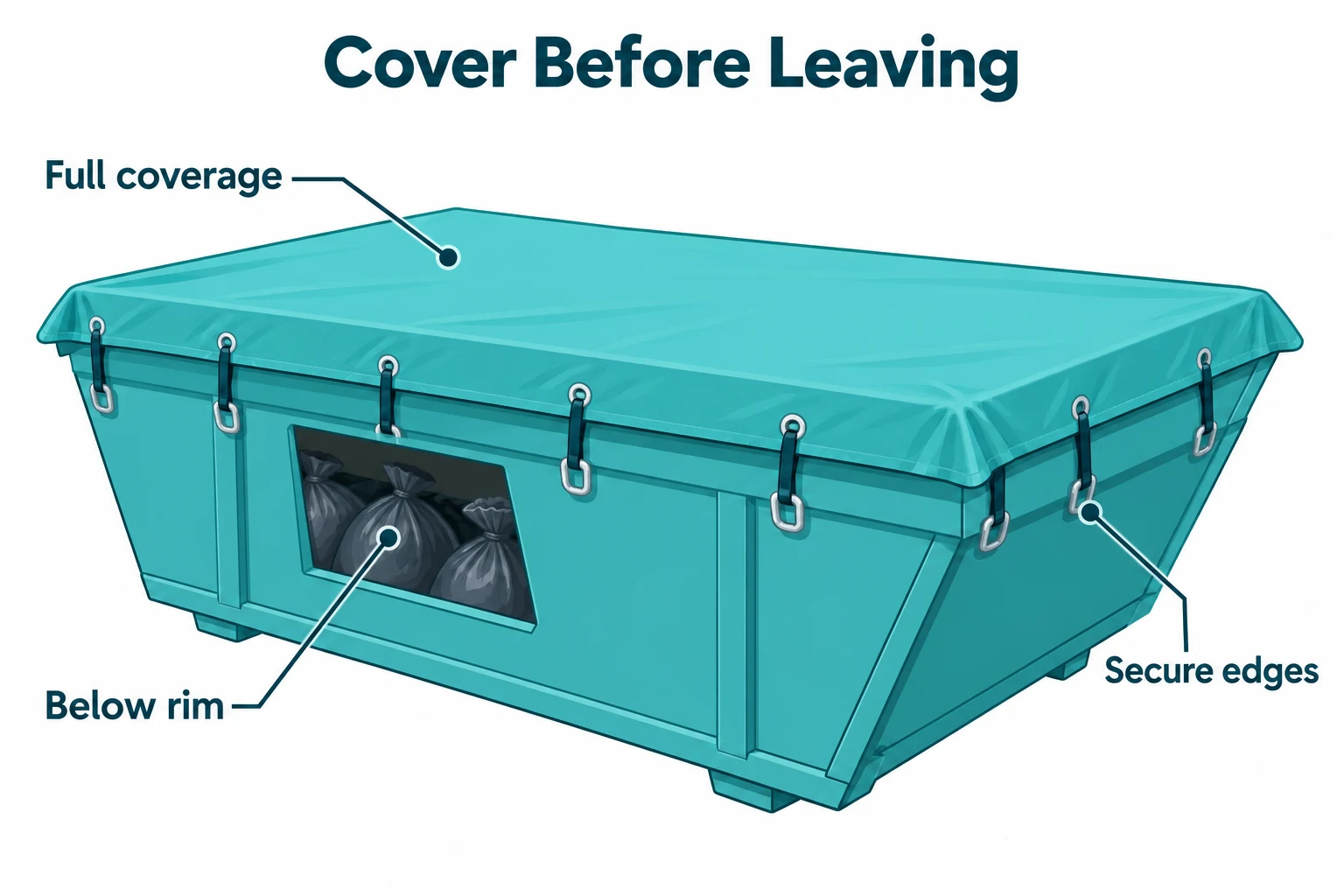
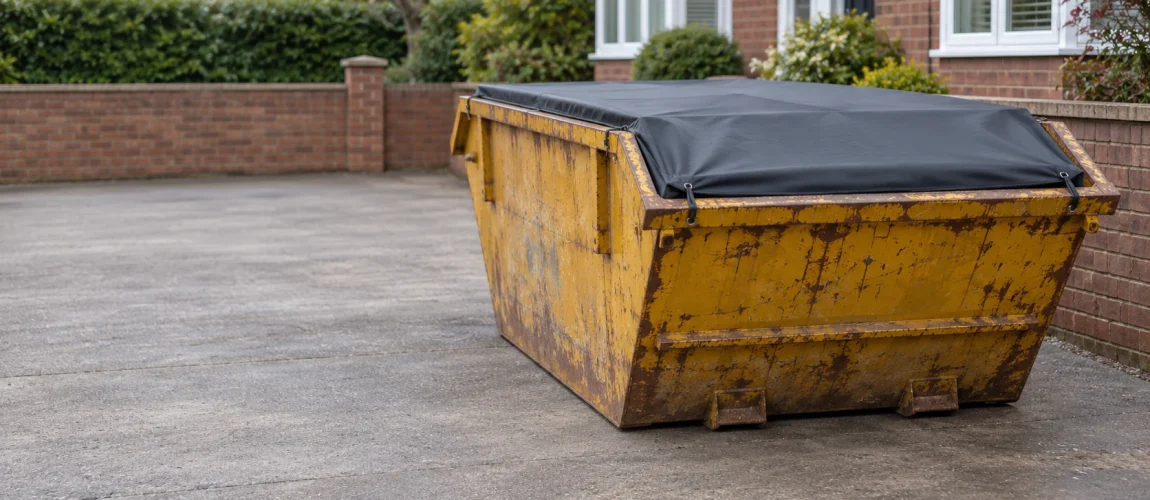
A suitable cover can help prevent lightweight waste escaping when work stops. Ask your skip provider what they recommend and whether the skip has suitable attachment points. Do not assume every skip can be covered in the same way.
Mesh can help contain larger lightweight pieces, but it will not reliably contain fine dust. A solid sheet may provide more coverage, although it needs secure fastening and can collect rainwater. Neither replaces properly containing dusty material before loading.
- Use a cover of an appropriate size and follow the supplier’s fastening guidance.
- Keep ropes and fastenings away from walking routes.
- Never secure a sheet with loose bricks, rubble or tools.
- Do not climb onto the skip to fit or adjust a cover.
If fitting it safely from ground level is not possible, ask for assistance. Avoid opening a large sheet in strong wind. Before collection, ask whether your temporary cover should be removed, and leave transport covering and securing to the collection team.
Adapt your routine to wind, rain and dust
Check conditions before handling loose waste outdoors. In gusty weather, pause work that involves opening bags of light material or transferring loose packaging. Keep waste securely stored until you can load it without it blowing towards neighbours, pedestrians or drains.
Dry leaves and small garden trimmings are easier to manage when gathered into suitable containers or sacks before transfer. Confirm whether your provider accepts garden waste in bags or needs it loose. Our advice on managing garden waste during a clearance can help you plan the wider job.
Do not rely on rain to settle dust or leave sacks open to collect water. Wet bags can become heavier and harder to handle, while runoff can carry debris towards drains.
Control dust where it is generated using methods appropriate to the task and material. Avoid dry sweeping or using a leaf blower on dusty renovation debris. For fine construction dust, use suitable dust extraction and follow relevant safety guidance.
Keep the loading area tidy throughout the hire
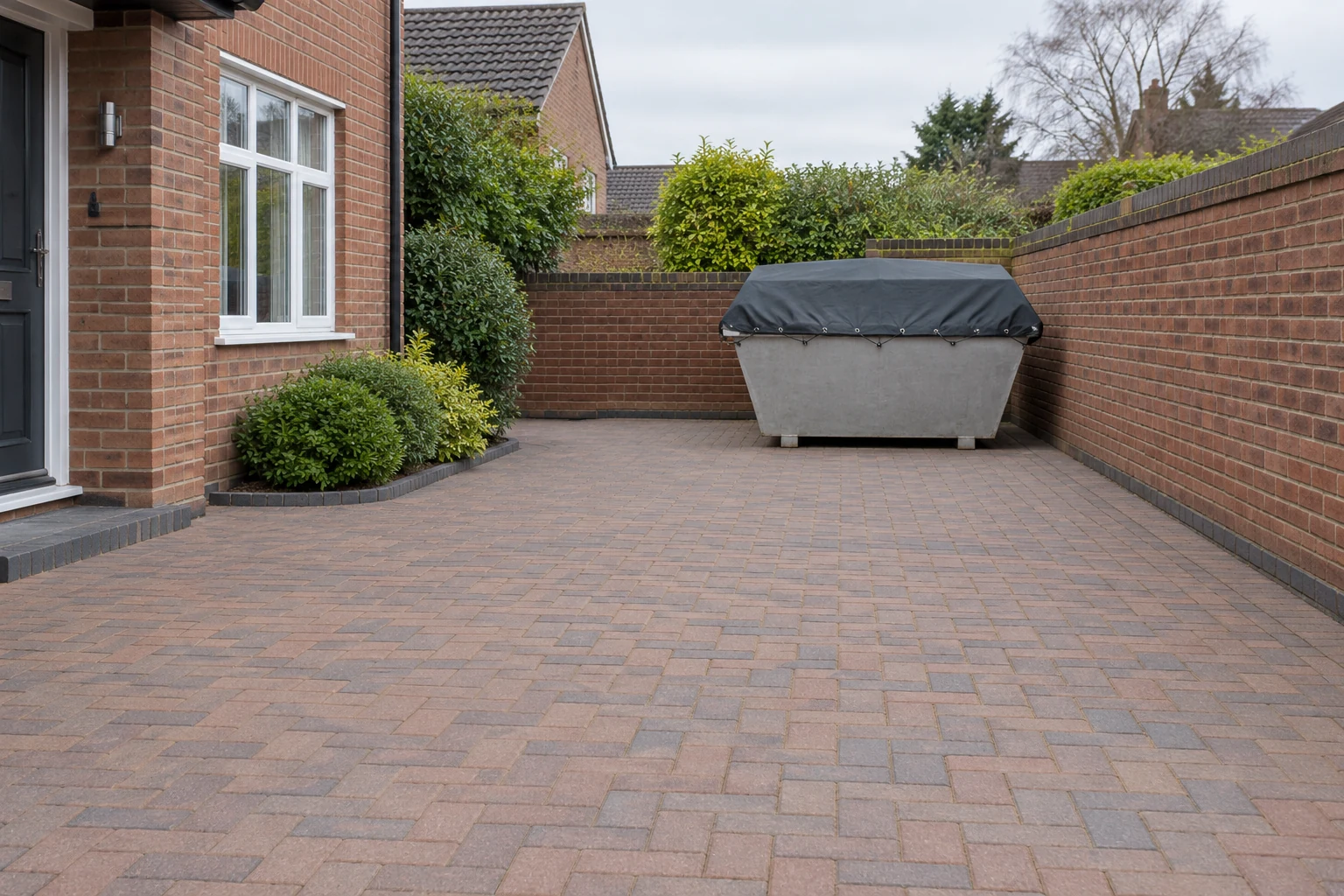
A quick check after each loading session helps you catch problems early. Look for torn bags, loose wrapping caught on the rim and fragments beside the skip. Deal with anything you can safely reach from ground level, without leaning over sharp waste.
Keep the route to the skip clear. Store waiting bags securely away from footpaths, drains and vehicle movements, and avoid leaving loose piles beside the skip overnight. If several people are working, agree where each waste type goes and who checks the area before leaving.
Keep children and pets away from both the skip and the waste waiting to be loaded. Gloves and sturdy footwear are sensible when handling ordinary debris, but additional protection depends on the material and task.
Before collection, check that access is clear and tell the provider about any damaged bags or containment concerns. Do not reach into the load to retrieve an item that has become buried or trapped.
- Confirm that each waste type and its packaging are accepted before loading.
- Bag small waste at the source and close sacks securely.
- Place bags gently and keep lightweight material away from exposed edges.
- Use suitable covers safely, without loose objects as weights.
- Check the loading area regularly and keep drains and walking routes clear.
Frequently asked questions
Can I put bin bags in a skip?
Ask your provider first. Acceptance depends on the contents and any inspection requirements. Ordinary bin bags are generally too fragile for rubble or sharp fragments, so choose packaging suited to the accepted waste.
Will a tarpaulin stop dust escaping?
Not reliably on its own. Dust can escape during loading and when the sheet is moved. Fine material needs appropriate containment before it enters the skip, and some materials require a separate disposal route.
Should I wet loose waste to keep it contained?
Do not soak mixed waste as a general solution. Water can increase weight and create runoff. Any dust suppression should suit the specific material and task, rather than replacing suitable containment.
What should I do if a bag splits inside the skip?
Stop adding waste in that spot. Only deal with it if you can do so safely from ground level without reaching into sharp debris. Otherwise, contact your provider for advice and explain what the bag contains.
Make a tidy start to your clearance
Planning a clear-out or renovation? Ask Centro Waste about suitable waste, bagging and cover arrangements before delivery, so you can prepare with confidence.