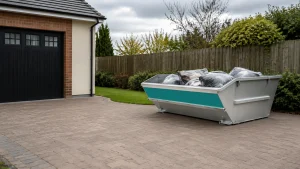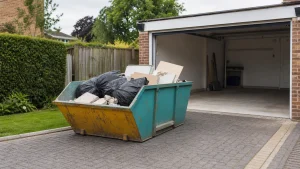
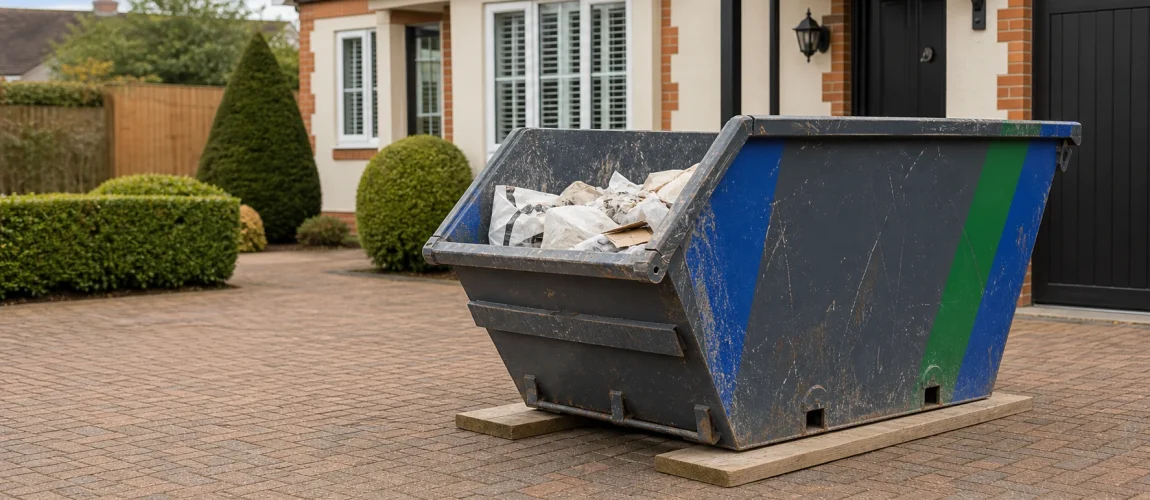
For many household projects, the driveway is the most convenient place to put a skip. It keeps waste close to the work area, avoids carrying heavy bags too far and can make the whole clear out feel much more organised.
The sensible question is whether a skip can sit there without causing marks, cracks or pressure damage. In most cases the answer is yes, provided the surface is suitable, the skip is placed carefully and the load is managed with a bit of common sense.
The short answer for most driveways
A skip can usually go on a driveway without causing damage when the driveway is in sound condition and there is enough room for safe delivery. Domestic skips are placed on private driveways every day for house clearances, garden work, small building jobs and renovation projects. The key is not just the skip itself, but the surface it rests on and how it is loaded while it is there.
Driveways are designed to take weight, but not every driveway behaves in the same way. A solid concrete or block paved drive in good repair will normally cope better than a cracked, uneven or recently laid surface. If there are loose blocks, sunken patches, thin edges or visible movement under foot, those are signs to think carefully before booking. The weight of a filled skip is much greater than the empty skip that first arrives.
It also helps to think about why the skip is needed. Light household clutter is very different from broken tiles, soil, bricks or rubble. Dense waste adds weight quickly, so it needs a suitable skip size and a sensible loading plan. If the project is part of wider home improvement work, Centrowaste customers may find it useful to compare their plans with practical advice on skip hire for home renovations before deciding where the skip should go.
What can cause driveway damage
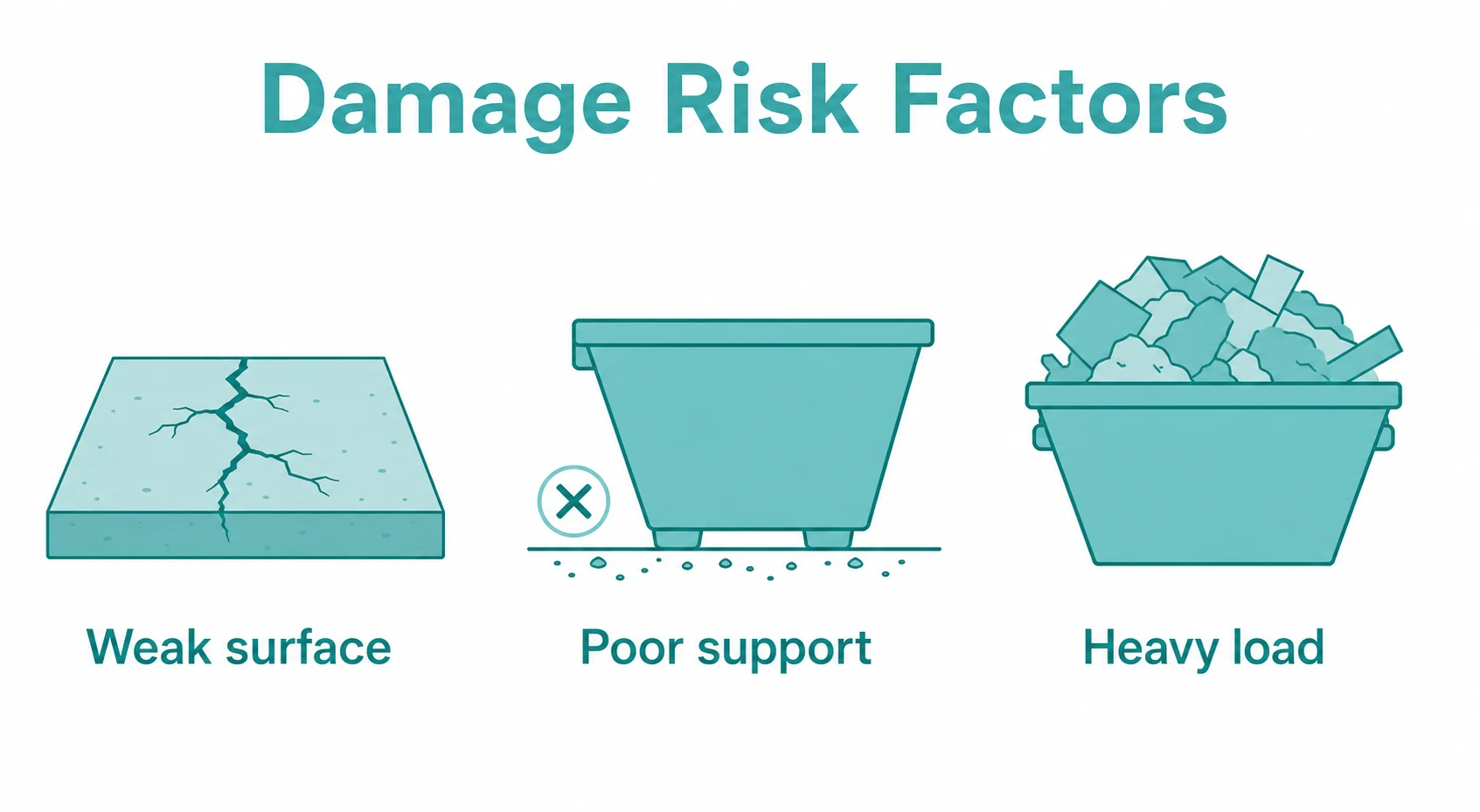
Most driveway concerns come down to pressure, movement and existing weakness. A skip spreads weight through its base and contact points, but if the ground beneath is already fragile, the extra load can make defects more obvious. Small cracks can widen, loose slabs can rock and soft ground near the edge of a drive can compress under weight.
Block paving can be vulnerable if the bedding layer has settled or if individual blocks are loose. Tarmac can mark more easily in warm weather, especially if it is thin, old or soft. Resin surfaces vary depending on the installation and condition, while gravel may shift or rut when a lorry needs to position the skip. Concrete is often robust, but even concrete can crack if it is already fractured or unsupported at the edges.
The delivery process matters too. A skip lorry needs enough space to reverse or manoeuvre, lower the skip steadily and leave without scraping walls, gates or parked vehicles. Damage is less likely when access is clear and the driver can place the skip squarely in one controlled movement. Tight angles, low branches, narrow entrances and obstacles on the drive all make placement harder than it needs to be.
Loading is another common cause of avoidable strain. Heavy materials should be spread evenly rather than piled high at one end. Rubble, soil and tiles should sit low in the skip, with lighter waste above where appropriate. Overfilling is not only unsafe for collection, it also places unnecessary stress on the skip and the surface beneath it.
How to prepare the driveway before delivery
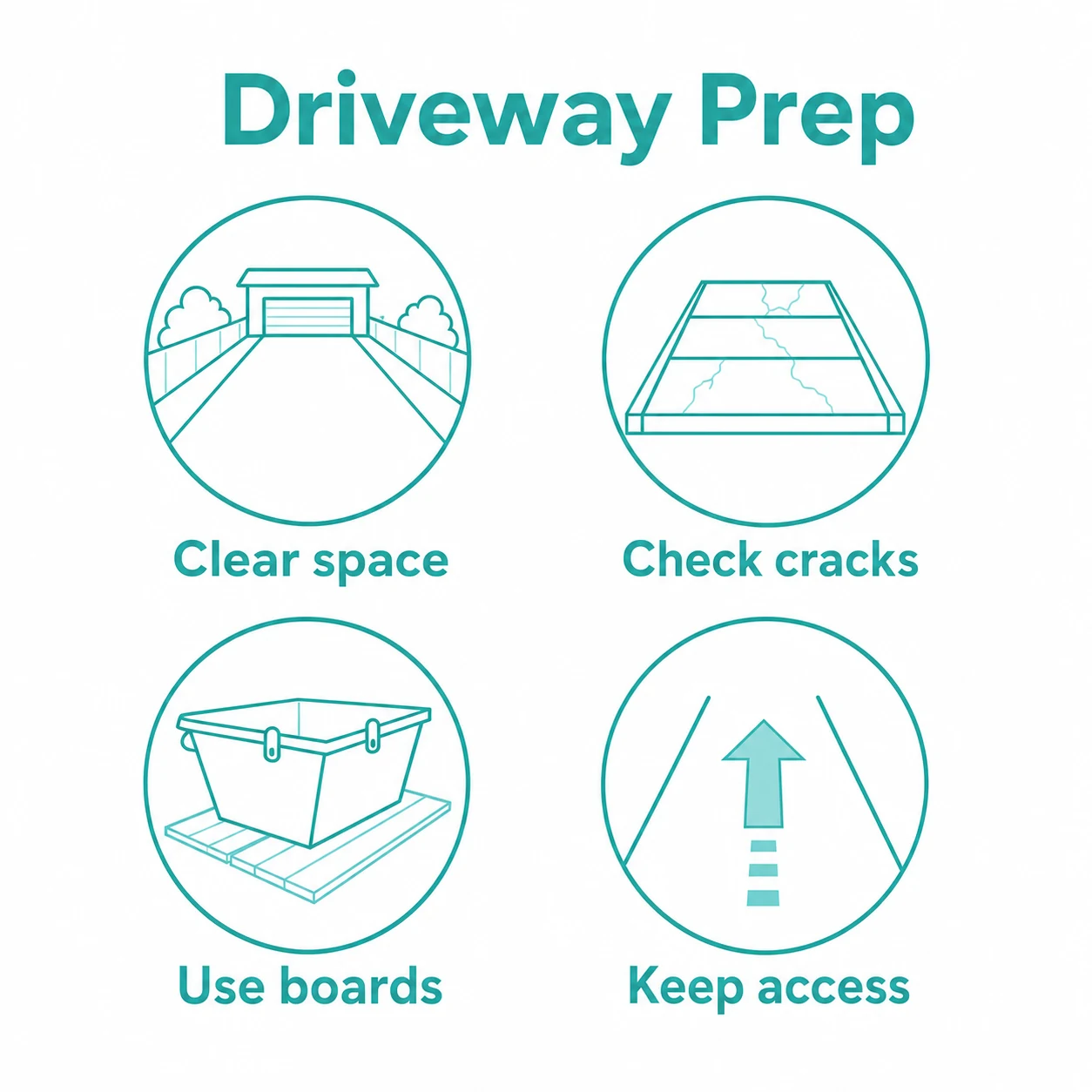
A few minutes of preparation can make a real difference. Before the skip arrives, clear the driveway of cars, plant pots, bins, tools and loose items. Make sure gates are open, pets and children are indoors and there is a clear route for the lorry. If the driver can see the full area and position the skip without interruption, the delivery is much smoother.
Check the surface in daylight if possible. Look for cracks, loose paving, soft spots, drains, inspection covers and thin edges. Avoid asking for the skip to be placed directly on drain covers or service covers unless you are confident they are rated for the load. Covers can crack, dip or become difficult to lift later if weight is applied in the wrong place.
It is also worth thinking about boards. Sturdy timber boards can help spread the load and reduce the chance of contact marks on some surfaces. They are especially useful where the driveway finish is more decorative or where you want an extra layer of protection. Boards need to be strong, flat and correctly positioned, so mention this when arranging the skip rather than leaving it as a last minute decision.
Plan the working area around the skip as well. Leave room to open doors, move wheelbarrows and carry bags safely. If you are clearing a garage, shed or spare room, keeping the path short and direct reduces lifting and cuts down on mess. For projects where the volume is uncertain, guidance on estimating skip size for domestic projects can help you avoid choosing a skip that is too small or unnecessarily large.
When a driveway may not be the best place
Sometimes the most practical answer is to use a different location. A driveway may not be suitable if it is very narrow, steep, newly laid, visibly damaged or blocked by overhanging structures. A skip also needs to be placed where it can be collected safely once full, so the access needs to work at both ends of the hire.
A recently installed driveway deserves particular care. New surfaces may need time to settle or cure before they take heavy loads. If you are unsure, check with the installer or the product guidance for that surface. It is better to ask before delivery than to discover later that a guarantee or surface warranty has conditions around heavy loads.
If the driveway is shared, you should consider access for neighbours and other users. A skip that blocks a shared route can quickly become frustrating, even if it is only there for a short time. Keep paths, entrances and essential access clear wherever possible. Good placement is not just about protecting the surface, it is about keeping the property easy to use while work is happening.
There may also be projects where the waste type makes placement more important. Dense building waste, bathroom rip outs and kitchen renovations can create heavy loads. Garden soil and turf can become extremely heavy when wet. In those cases, talk through the waste type before booking so the skip size, position and collection plan all make sense.
How to load the skip without adding unnecessary risk
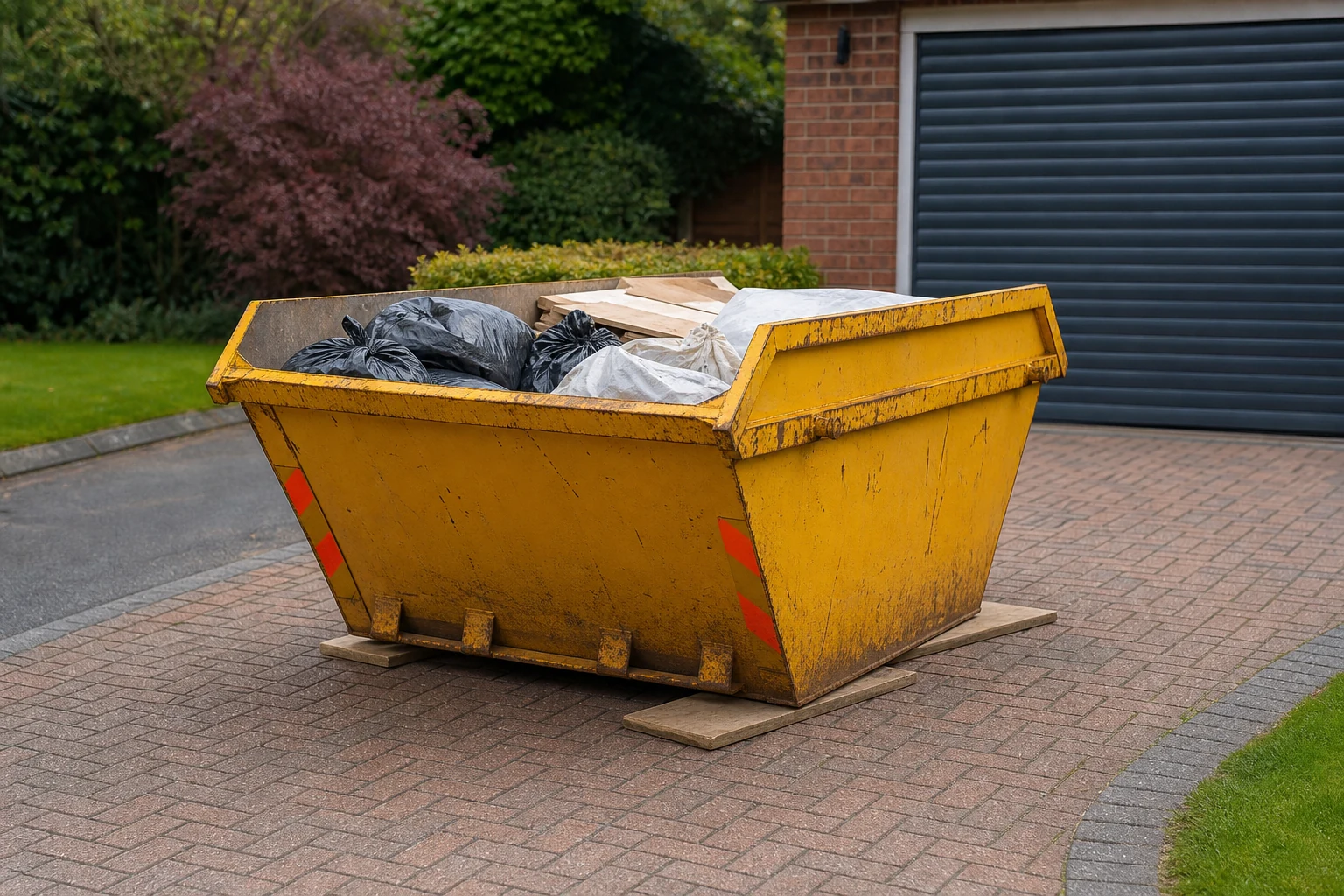
Once the skip is on the driveway, careful loading helps protect both the surface and the surrounding area. Start with heavier flat items at the bottom where they can sit securely. Spread dense materials across the base rather than dropping everything into one corner. This creates a more stable load and avoids concentrated pressure.
Bagged waste is often easier to handle neatly, especially for plaster, tiles, small rubble, old fixtures and mixed household items. Keep sharp materials contained where possible and avoid throwing heavy pieces from a height. Dropping weight into a skip can cause jolts that travel through the skip to the driveway beneath it.
Do not fill above the sides. A level load is safer for collection and helps the driver lift the skip cleanly. If you already know the project may produce more waste than expected, it is better to discuss size at the start rather than hoping everything will fit. A garage clear out, for example, can reveal much more hidden material than expected, which is why a guide such as what to expect from a 6 yard skip garage clear out can be useful before booking.
Keep unsuitable items out of the skip too. Certain materials need separate handling, and mixing them in can delay collection or create extra sorting work. If in doubt, ask before loading. Clear sorting also supports better recycling once the skip is removed, and Centrowaste explains more about that process in its guide to how waste is sorted and recycled after collection.
What to tell Centrowaste before you book
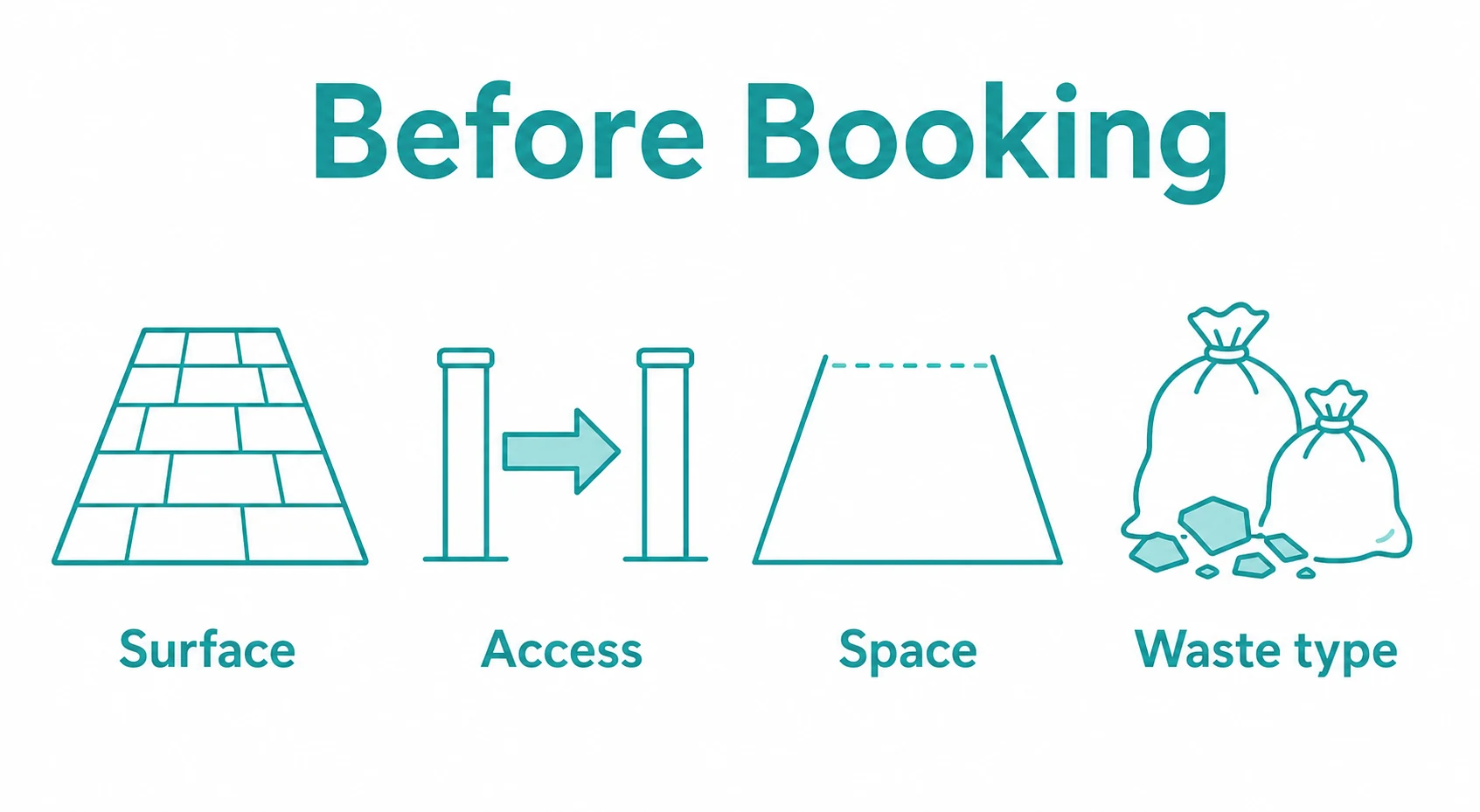
The best skip placement decisions are made before the lorry arrives. When booking, explain that you would like the skip on a driveway and describe the surface. Mention whether it is block paving, concrete, tarmac, resin, gravel or another material. You do not need to be an expert, but a clear description helps the team give practical guidance.
Share any access details that could affect delivery. This includes narrow entrances, low walls, parked cars, slopes, tight turns, overhead cables, trees and anything else near the planned position. If collection access may change during the project, for example because building materials will arrive later, say so in advance.
Be clear about the waste type as well. Household clutter, old furniture, bathroom waste, kitchen units, bricks, tiles, soil and garden cuttings all create different loading patterns. The more accurate the description, the easier it is to recommend a sensible skip and avoid unnecessary movement once the skip is delivered.
Centrowaste aims to make skip hire straightforward for domestic customers. A short conversation before booking can help confirm whether the driveway is suitable, whether boards are worth considering and how to keep the area tidy until collection. That practical planning is usually what prevents problems.
- A skip can usually go on a sound driveway when there is clear access and sensible placement.
- Surface condition matters more than appearance, so check for cracks, loose areas, soft edges and drain covers.
- Heavy waste should be spread evenly and kept level with the skip sides.
- Boards may help protect decorative or more vulnerable surfaces when used correctly.
- Tell Centrowaste about the driveway, access and waste type before booking.
Frequently asked questions
Will a skip leave marks on my driveway?
It can leave temporary contact marks on some surfaces, especially if the driveway is older, soft or decorative. Good placement, clear access and suitable boards can reduce the risk.
Can I put a skip on block paving?
Often, yes, provided the paving is firm, level and in good repair. Loose or sunken blocks should be checked before delivery because a full skip can add significant weight.
Should I use boards under a skip?
Boards can be a sensible extra precaution on some driveways. They help spread weight and reduce direct contact, but they need to be strong and positioned properly.
What if my driveway is not suitable?
Centrowaste can talk through the access and placement options before booking. In some cases, another position may be more practical, subject to safe access and any permissions required.
Ready to plan your skip hire?
Speak to Centrowaste about your driveway, waste type and access before you book. A quick check helps make delivery, loading and collection simple from the start.